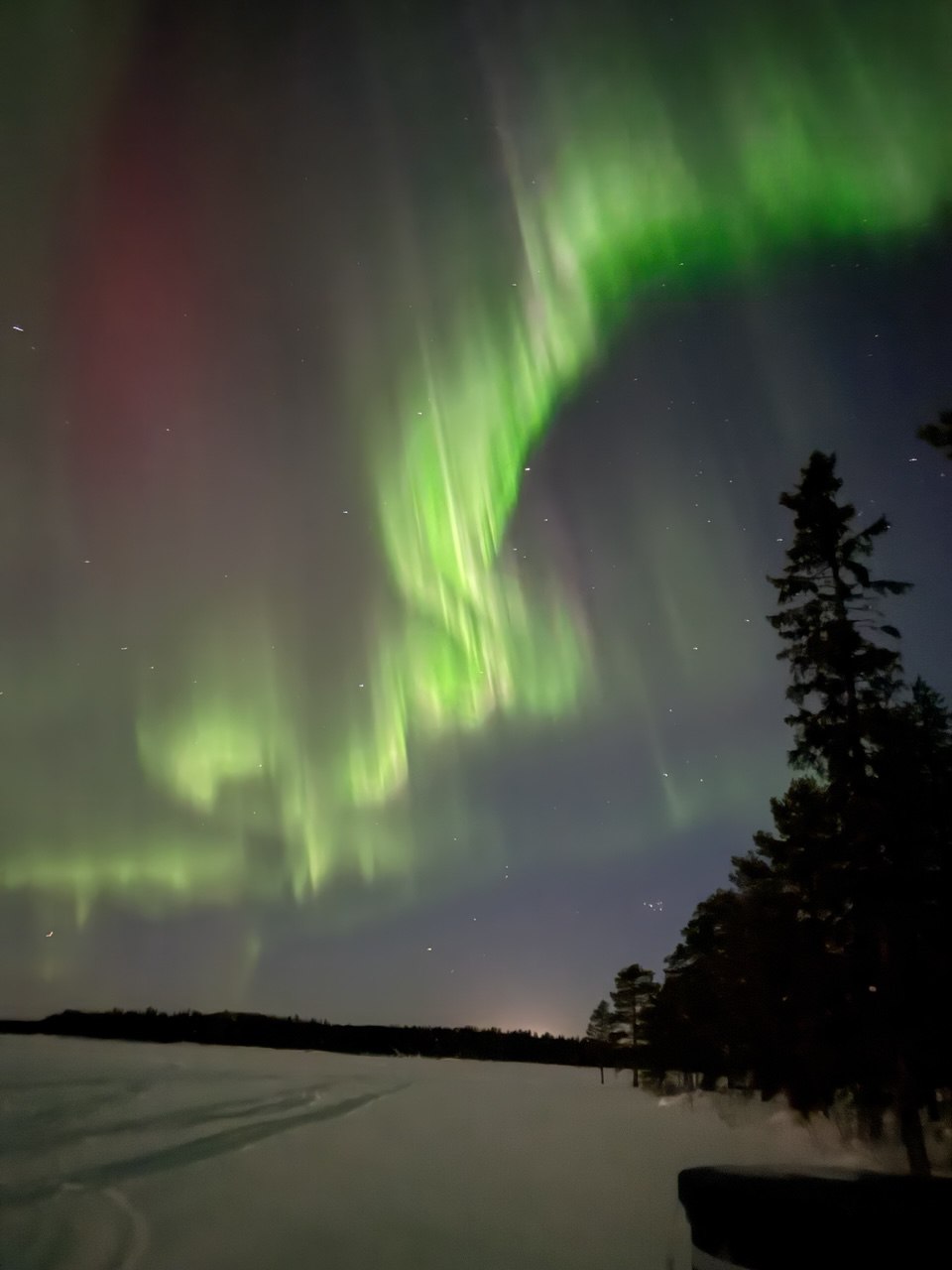
Finland is one of the best countries on Earth for seeing the Northern Lights. In Finnish Lapland, above the Arctic Circle, the aurora borealis is visible up to 200 nights per year. But not every spot in Lapland is equal. Light pollution, latitude, terrain, and weather patterns all play a role in determining whether you see a faint green glow or a full-sky display of dancing colour.
This guide covers the best locations in Finland for Northern Lights viewing in 2026-2027, what makes each area unique, and practical advice for maximising your chances of witnessing one of nature's most extraordinary spectacles.
Why Finland for the Northern Lights?
Finland occupies a geographic sweet spot for aurora viewing. The country extends well above the Arctic Circle, placing Finnish Lapland directly beneath the auroral oval, the band of maximum Northern Lights activity that rings the magnetic North Pole. Combined with Finland's dry continental climate (clearer skies than Norway's coast) and remarkably low population density (meaning almost no light pollution), the conditions for aurora viewing are exceptional.
The 2026-2027 season is particularly promising. Solar Cycle 25, which began in 2019, is at or near its peak, producing higher levels of solar activity and stronger, more frequent auroral displays than in recent years. This means better aurora visibility reaching further south, and more intense displays in Lapland.
Top Northern Lights Locations in Finland
Finnish Lapland (Above the Arctic Circle)
The entire region of Finnish Lapland above the Arctic Circle (approximately 66.5°N and northward) offers outstanding aurora viewing. Within this region, specific locations stand out for their combination of latitude, low light pollution, and accessibility.
Inari and Lake Inari: Finland's northernmost municipality, sitting at 69°N. The vast frozen surface of Lake Inari provides an unobstructed view of the northern sky, and the indigenous Sami culture adds depth to the experience. Inari is arguably the single highest-probability location for aurora sightings in Finland.
Muonio and Kilpisjarvi: The far northwestern arm of Finland, on the border with Sweden and Norway. Kilpisjarvi sits at 69.1°N and benefits from some of Finland's clearest skies. The terrain is open fell (treeless highland), giving 360-degree views of the sky.
Sodankyla and Luosto: Home to the Finnish Meteorological Institute's aurora observatory, Sodankyla has been studying the Northern Lights scientifically for over a century. The nearby Luosto area is one of the few places in Finland with a dedicated aurora alarm system in local hotels.
Cape Kalevala (latitude ~66.5°N): Sitting right on the Arctic Circle, Cape Kalevala's Aurora Season retreat combines Northern Lights viewing with the experience of a private lakeside lodge. The property's remote location means zero light pollution. The lake in front of the lodge provides a natural reflective surface that doubles the visual impact of any aurora display, and the lakeside hot tub offers what may be the most comfortable aurora viewing seat in Lapland.
Rovaniemi and Surroundings
Rovaniemi, the capital of Lapland, sits almost exactly on the Arctic Circle. While the city itself produces some light pollution, the surrounding countryside offers good aurora viewing. Rovaniemi's main advantage is accessibility: it has the largest airport in Lapland with direct flights from Helsinki and several European cities.
For serious aurora viewing from a Rovaniemi base, you need to travel 20-30km outside the city to escape the light dome. Several lodges and tour operators in the Rovaniemi region offer guided aurora excursions to darker locations.
Levi, Saariselka & Ski Resorts
Lapland's ski resorts (Levi, Saariselka, Yllas, Ruka) are popular bases for aurora viewing, particularly for visitors who want to combine Northern Lights with skiing or other winter activities. The fell tops above the resorts provide elevated, unobstructed views of the sky. However, the resorts themselves produce more light pollution than more remote lodges and camps.
When to See the Northern Lights
Best Months
The Northern Lights are visible in Finnish Lapland from September through March, whenever the sky is dark and clear. However, different months offer distinct experiences:
- September-October: The aurora season opens as the nights return after the midnight sun. The landscape is in autumn colours (ruska), creating a unique combination of golden forests and green aurora. Temperatures are mild (0-10°C), making comfortable outdoor viewing possible without extreme cold-weather gear.
- November-January: Peak darkness. In the far north, the polar night (kaamos) means the sun doesn't rise at all, giving maximum darkness for aurora viewing. December and January are the coldest months (-15 to -30°C), but also the most atmospheric, with snow-covered landscapes and the blue twilight of the polar night.
- February-March: The sweet spot for many visitors. Daylight returns, making daytime activities possible, while nights remain long and dark enough for aurora viewing. Snow conditions are excellent, and temperatures begin to moderate. March in particular offers a good balance of light, warmth, and aurora probability.
Best Time of Night
In Finnish Lapland, Northern Lights can appear at any time after dark. The statistically most active period is between 10pm and 2am, but displays can begin as early as 6pm and continue past dawn. Patience is essential, and staying at an accommodation with direct sky views (rather than relying on scheduled excursions) significantly increases your chances.
How to Maximise Your Chances
- Stay multiple nights: A single night gives you roughly a 50-60% chance of seeing the aurora in peak season. Three nights raises that to over 80%. A week makes a sighting almost certain.
- Choose low light pollution: Remote lodges and cabins far from towns offer dramatically better viewing than hotels in tourist centres
- Check forecasts: The Finnish Meteorological Institute (ilmatieteenlaitos.fi) publishes aurora forecasts and real-time magnetometer data. Apps like "My Aurora Forecast" provide push notifications when conditions are favourable
- Look north: The aurora appears in the northern sky. Accommodation with north-facing windows or an unobstructed northern view is ideal
- Dress properly: You may be outside for hours. Layer up with thermal base layers, insulated mid-layers, and a windproof outer shell. Don't forget warm boots, gloves, and a hat
Photographing the Northern Lights
Capturing the aurora on camera is easier than most people think, provided you have the right settings. A modern smartphone can capture decent aurora images, but a camera with manual controls produces far better results.
- Camera: Any camera with manual exposure settings (DSLR, mirrorless, or advanced compact)
- Lens: Wide-angle (14-24mm) with a fast aperture (f/2.8 or wider)
- Tripod: Essential. Any exposure longer than 1 second requires a stable platform
- Settings: ISO 1600-3200, aperture wide open, shutter speed 10-25 seconds
- Focus: Switch to manual focus and focus on infinity (or on a distant bright star)
The most striking aurora photographs include foreground elements: a frozen lake, snow-covered trees, or a lakeside sauna. At Cape Kalevala, the combination of the lake, the forest treeline, and the lodge itself provides ready-made compositional elements for aurora photography.
Frequently Asked Questions
When is the best time to see the Northern Lights in Finland?
The best time is September through March, with peak viewing from December through February. The aurora is visible on clear, dark nights when solar activity is high. In Finnish Lapland, the Northern Lights appear up to 200 nights per year.
Where is the best place in Finland to see the Northern Lights?
The best places are in Lapland, above the Arctic Circle. Remote locations far from light pollution offer the clearest views. Inari, Muonio, Kilpisjarvi, and Cape Kalevala are among the top spots due to their northern latitude and minimal light pollution.
Can you see the Northern Lights every night in Finland?
No. Visibility depends on solar activity, clear skies, and darkness. During peak season in Finnish Lapland, the aurora is statistically visible roughly 3 out of every 4 clear nights. Staying multiple nights significantly increases your chances.
How do you photograph the Northern Lights?
Use a camera with manual settings, a sturdy tripod, and a wide-angle lens. Set ISO to 1600-3200, aperture to the widest setting, and shutter speed to 10-25 seconds. Turn off autofocus and manually focus to infinity.
See the Northern Lights at Cape Kalevala
Our remote lakeside location in Finnish Lapland offers zero light pollution and unobstructed views of the northern sky. Watch the aurora from the hot tub, the sauna, or the lakeshore.
Explore Aurora Season