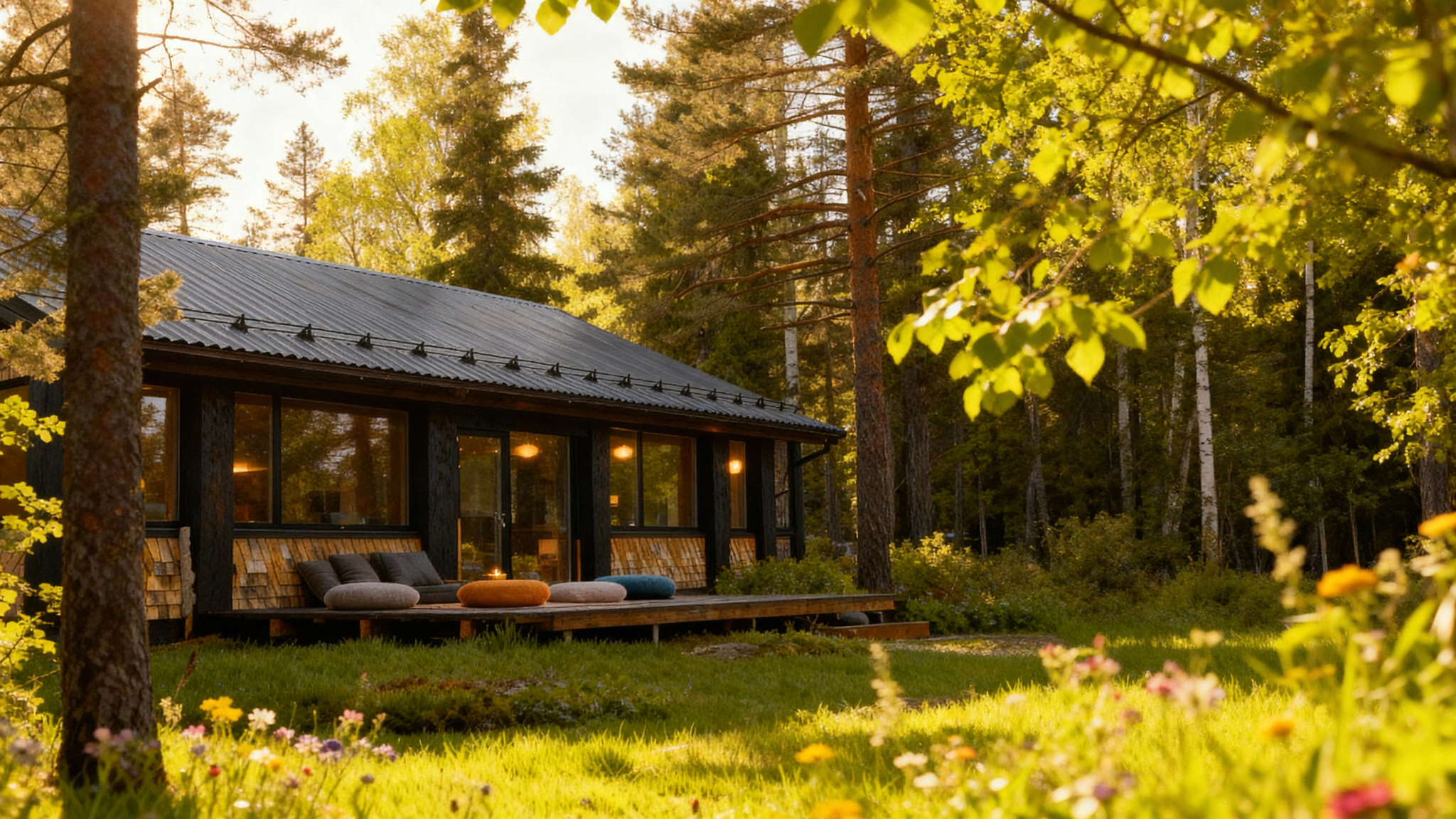
Every autumn, something extraordinary happens in the Finnish wilderness. The boreal forest, green and lush through the long summer, begins to transform. First the ground cover: the blueberry bushes turn deep crimson. Then the birches, shifting from green to gold seemingly overnight. Within days, the entire landscape blazes with colour, a spectacle the Finns call ruska.
While New England's fall foliage draws millions of visitors, Finland's ruska season remains largely unknown outside the Nordic countries. This is one of Europe's great natural events, unfolding across vast stretches of pristine wilderness with almost no one watching. For those who do witness it, ruska in Finnish Lapland is an experience that rivals anything the natural world has to offer.
What Is Ruska?
Ruska (pronounced "roos-ka") is the Finnish term for the autumn colour season. Unlike the English phrase "fall foliage," ruska encompasses not just the changing of tree leaves but the transformation of the entire landscape: ground-cover plants, shrubs, grasses, and mosses all participate in the display. In Finnish Lapland, where birch, rowan, and aspen trees are interspersed with the green permanence of spruce and pine, the contrast between the fiery deciduous colours and the dark evergreens creates a visual depth that pure deciduous forests cannot match.
The science is the same as anywhere: shorter days and cooler nights trigger the breakdown of chlorophyll in leaves, revealing the yellows, oranges, and reds that were hidden beneath the green all summer. But in Lapland, the process is compressed and intensified by the rapid onset of Arctic autumn. The change can happen in as little as a week, turning the forest from green to gold in what feels like a single exhale.
When Does Ruska Happen?
Ruska begins in the far north of Finland and rolls south over approximately four weeks. The typical timeline:
- Early September: Ruska begins in the fells and highlands of northernmost Lapland (Utsjoki, Enontekio, Kilpisjarvi). The open fell landscape, with its low-growing vegetation, shows colour first.
- Mid-September: Peak ruska in central Lapland. This is when the forests around Inari, Muonio, Sodankyla, and the Cape Kalevala region reach their most intense colours. The combination of golden birches, crimson ground cover, and mirror-still lakes creates landscapes of almost surreal beauty.
- Late September: Ruska reaches southern Lapland and central Finland. The Kainuu and Ostrobothnia regions are at peak colour.
- Early October: The last ruska colours appear in southern Finland before the trees shed their leaves entirely.
The exact timing varies by a week or two each year, depending on summer temperatures, rainfall, and the speed of autumn cooling. The Finnish Meteorological Institute publishes ruska forecasts and real-time colour maps to help visitors time their trips.
Experiencing Ruska in Finnish Lapland
Forest Bathing & Hiking
The single best way to experience ruska is on foot, walking through the forest as the colours surround you. In Lapland, the hiking trails wind through ancient boreal forest where the golden birch canopy creates a cathedral-like effect overhead, filtering the autumn sunlight into a warm, amber glow. The forest floor is a carpet of crimson blueberry bushes and russet ferns, and the air carries the sharp, clean scent of autumn.
The Japanese practice of shinrin-yoku (forest bathing) reaches its most potent expression during ruska. The sensory richness of the forest, the colours, the textures, the smells, the quality of the light, engages the mind at a level that no other environment can match.
Lake Activities
Finnish Lapland's lakes are at their most beautiful during ruska. The water, cooling in the autumn air, becomes perfectly still, creating flawless reflections of the colourful forest on the opposite shore. Canoeing through this doubled landscape, the real forest above and its perfect mirror image below, is one of the most visually stunning experiences available in the natural world.
Foraging
Ruska season coincides with the peak of the foraging season. Wild mushrooms, particularly the prized chanterelle and funnel chanterelle, push through the mossy forest floor in abundance. Lingonberries and cranberries reach peak ripeness, and the forest offers a harvest that has sustained Finnish communities for millennia.
At Cape Kalevala's Autumn Retreats, guided foraging expeditions are a central part of the experience. What you gather in the morning appears on your plate at dinner, prepared by the lodge's kitchen using traditional Finnish techniques.
The First Aurora of the Season
As ruska progresses and the nights grow longer, the darkness brings a gift: the return of the Northern Lights. The aurora borealis season begins in earnest in September, and there is something magical about seeing the green and purple lights of the aurora dancing above a forest still blazing with autumn gold. It is a combination of natural spectacles that exists nowhere else on Earth with such intensity.
Why Ruska Is Finland's Best-Kept Secret
Despite being one of the most visually spectacular natural events in Europe, ruska draws a fraction of the visitors that Finnish Lapland's winter season attracts. The reasons are partly marketing (Finland's tourism industry has focused heavily on winter, aurora, and Santa Claus) and partly timing (September falls between the European summer holiday and the winter travel season).
For visitors, this invisibility is an enormous advantage. The trails are empty. The lodges are quiet. The entire landscape is yours. The temperatures are comfortable (5-15°C during the day), the mosquitoes are gone, and the combination of autumn light, golden forests, and pristine lakes creates a landscape photographer's paradise.
Cape Kalevala's Autumn Retreats run from September through October, timed precisely to coincide with ruska season. Guests experience the full spectacle from a lakeside lodge surrounded by the changing forest, with guided hikes, foraging, lake activities, sauna, and the first aurora sightings of the season.
Frequently Asked Questions
What is ruska in Finland?
Ruska is the Finnish word for autumn colour season, when deciduous trees and ground vegetation turn vivid shades of gold, crimson, orange, and amber. It is one of the most spectacular natural colour displays in the Nordic countries.
When does ruska season happen in Finland?
Ruska begins in northern Lapland in early September and peaks around mid-September. It moves southward, reaching central Finland in late September and southern Finland in early October. Timing varies slightly each year.
Where is the best place to see ruska?
Finnish Lapland offers the most dramatic ruska, with vast unbroken forests turning colour simultaneously. National parks and private lodges like Cape Kalevala, set on pristine lakeshores, provide intimate ruska experiences.
What activities are best during ruska season?
Forest hiking, mushroom and berry foraging, canoeing on mirror-still lakes reflecting autumn colours, photography, and watching the first Northern Lights as the dark nights return.
Experience Ruska at Cape Kalevala
Our Autumn Retreats run September through October — golden forests, foraging, pristine lakes, and the first aurora of the season.
Explore Autumn Retreats