Most corporate retreats fail before they begin. Not because the agenda is wrong or the facilitator is bad, but because the setting is wrong. A hotel conference room with beige walls and bad coffee is the same environment your team works in every day, minus the desk. Nothing changes because nothing feels different.
The corporate retreats that actually produce results, the ones people talk about years later and point to as turning points, happen in places that break every routine. They happen in nature.
The Problem with Traditional Corporate Retreats
The standard corporate retreat formula is well-known: book a hotel with meeting facilities, schedule a mix of workshops and team-building activities, add a dinner, and hope that something meaningful happens. The reality is usually a slightly nicer version of the office. People check their phones between sessions. Conversations default to the same dynamics they have at work. The "team building" exercise feels forced. Everyone is back at their desk on Monday with nothing fundamentally changed.
The issue is not the content. It is the container. A hotel conference room sends a powerful subconscious message: this is still work. And when people feel like they are at work, they behave like they are at work, with all the hierarchies, tensions, and habits that implies.
Why Nature Changes Everything
Place the same team in a wilderness setting, where phones lose signal, where the day is structured around hikes and campfires rather than PowerPoint and breakout rooms, and something shifts. The research backs this up: time in natural environments reduces cortisol (the stress hormone) by up to 16%, improves creative problem-solving by up to 50%, and builds interpersonal trust faster than any structured team-building exercise.
When a CEO and a junior team member are hauling a canoe down to the water together, hierarchy dissolves. When a leadership team sits around a campfire watching the Northern Lights, the conversation goes to places it never reaches in a boardroom. Nature is the great equaliser, and it creates the conditions for honesty, creativity, and genuine connection that no amount of facilitator-led exercises can replicate.
Corporate Retreat Ideas That Deliver Results
1. The Digital Detox Offsite
Remove all devices for 48-72 hours. This sounds extreme, but it is the single most effective way to break the patterns that prevent deep thinking and genuine conversation. When the constant stream of notifications, emails, and Slack messages stops, mental clarity returns surprisingly fast.
Pair the digital detox with structured strategic sessions and long stretches of unstructured time in nature. The combination of enforced presence and natural beauty produces insights that months of regular meetings cannot.
2. The Wilderness Leadership Programme
Use outdoor challenges as metaphors and testing grounds for leadership skills. Navigating a hiking trail as a team requires many of the same skills as navigating a complex project: communication, decision-making under uncertainty, shared responsibility, and trust. The difference is that the consequences are immediate and physical, which makes the learning visceral rather than theoretical.
3. The Strategic Offsite in Nature
Replace the hotel meeting room with a lodge. Hold morning strategy sessions in a living room with floor-to-ceiling windows overlooking a lake instead of a windowless conference room. Schedule afternoon sessions as walking meetings along forest trails. End each day with sauna and a campfire debrief. The content is the same: strategy, planning, alignment. The environment transforms how people engage with it.
4. The Team Reset Retreat
For teams dealing with burnout, conflict, or post-restructuring challenges, a nature-based reset can be more effective than any number of HR interventions. Shared physical experiences (hiking, cooking together, sauna) rebuild trust at a primal level. The absence of work infrastructure removes the triggers for workplace tension. And the natural environment provides a neutral, restorative backdrop for difficult conversations.
What to Look for in a Retreat Venue
- Privacy: Exclusive use of the property. Your team should be the only group present, so conversations remain confidential and the experience feels cohesive
- All-inclusive: Meals, activities, and equipment handled by the venue. The retreat organiser should focus on content, not logistics
- Natural setting: Direct access to wilderness, water, or mountains. Not a hotel with a garden, but a property immersed in nature
- Flexible spaces: A living room or common area for sessions, outdoor spaces for walking meetings, and a campfire or gathering spot for evening discussions
- Remote but accessible: Far enough from civilisation to feel different. Close enough to an airport for reasonable travel
Why Finnish Lapland Works for Corporate Retreats
Finnish Lapland is quietly becoming one of the most sought-after destinations for corporate retreats. The reasons are compelling: complete wilderness with zero light pollution, a culture built around sauna and nature immersion, excellent infrastructure despite the remoteness, and a country consistently ranked among the happiest and most innovative in the world.
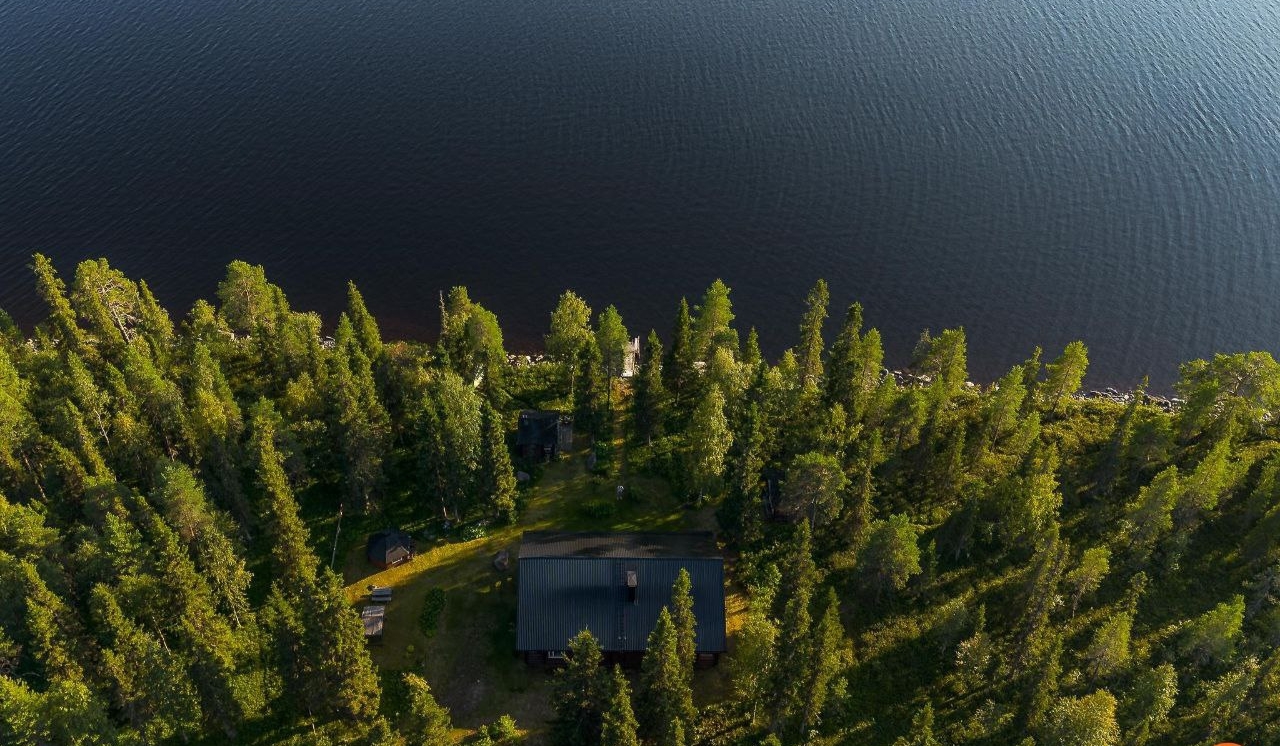
At Cape Kalevala, corporate groups book the entire lodge exclusively. The property sits on a private lakeside estate in Finnish Lapland, with a traditional wood-fired sauna, lakeside hot tub, and all the equipment for canoeing, paddleboarding, hiking, and winter activities. All meals are included, crafted from local and foraged ingredients. The remote setting ensures natural digital detox (signal is minimal), and the programme is custom-built around each team's objectives. External facilitators and leadership coaches can also hire the venue privately and bring their own corporate programme.
Whether it is a summer retreat under the midnight sun, an autumn offsite during the golden ruska season, or a winter programme with aurora viewing and snowshoeing, the setting provides something a hotel never can: an experience your team will never forget.
Frequently Asked Questions
Why are nature-based corporate retreats more effective than hotel-based ones?
Nature-based retreats remove the environmental cues of daily work life that keep teams stuck in usual patterns. Research shows that time in nature reduces cortisol levels, improves creative thinking, and creates stronger interpersonal bonds. Shared outdoor experiences build trust faster than structured exercises in a hotel ballroom.
What activities work best for corporate retreats in nature?
The most effective activities combine physical engagement with reflection: guided hiking with strategic discussions, canoeing that requires teamwork, campfire sessions for open conversation, sauna for informal bonding, and structured workshops interspersed with free time in nature.
How many days should a corporate retreat be?
A minimum of 3 nights is recommended. It typically takes a full day for team members to decompress and shift out of work mode. Days 2-3 are where genuine connection and creative thinking happen. For deeper strategic work, 4-5 nights is ideal.
Can a private lodge work for a corporate retreat?
A private lodge is often the ideal setting. Exclusivity means your team is the only group present, eliminating distractions. All-inclusive lodges handle logistics (meals, activities, equipment), letting organisers focus on content and outcomes rather than event management.
Plan Your Team's Next Retreat
Cape Kalevala offers exclusive corporate retreat bookings in Finnish Lapland — private lodge, all-inclusive, custom programming built around your team's goals.
Explore Corporate Retreats